BLOGS
Meta Just Capped Teen Attention at Two Hours. Here's What Kansas City Brands Should Do.


Ben Ahn
Linkplus, Director
What changed for teens on Instagram and Facebook in 2026?
On August 26, 2026, Meta settled a child-safety case with 51 U.S. states and territories. The money headline is large. The marketing headline is simpler: teens in most states, including Missouri and Kansas, will default to a two-hour daily cap across Instagram and Facebook combined.
Parents can turn the cap off. Teens cannot. Meta will also try to apply it if it detects extra accounts.
If your Kansas City brand still plans teen reach as “more Reels, more frequency,” that plan is now fighting the product.
What is Meta's two-hour teen time cap?
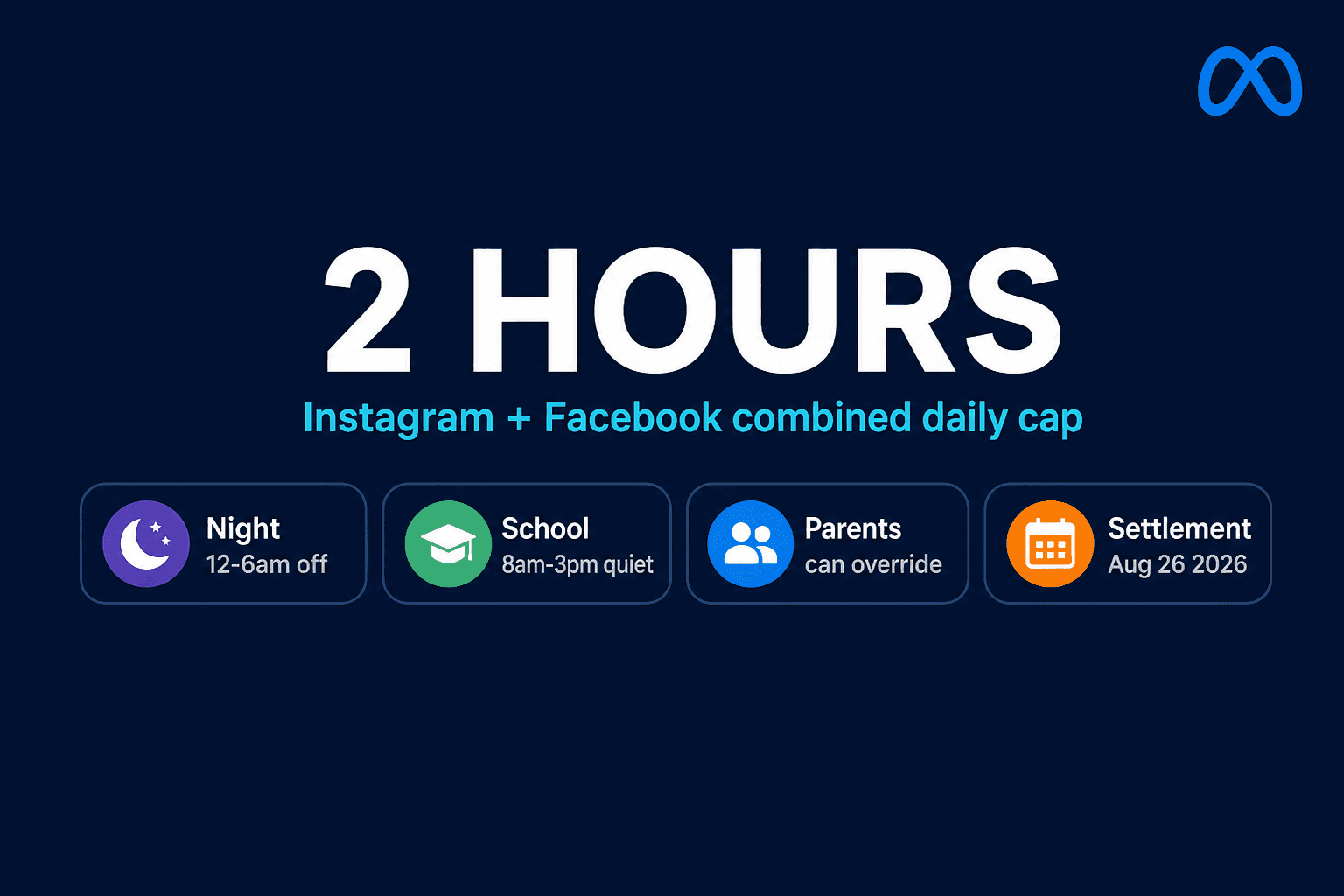
It is a combined two-hour daily limit across Instagram and Facebook for teen accounts. Time resets at midnight. The cap is the default in the settlement states. A parent can override it. A teen cannot.

Does the two-hour cap apply in Missouri and Kansas?
Yes. For a Kansas City metro brand, assume Missouri and Kansas teens get the default two-hour rules. Florida and New Mexico sit outside this exact package. Texas has a separate deal. Do not copy a Florida-only recap into a KC media plan.
What counts toward Meta's teen time limit?
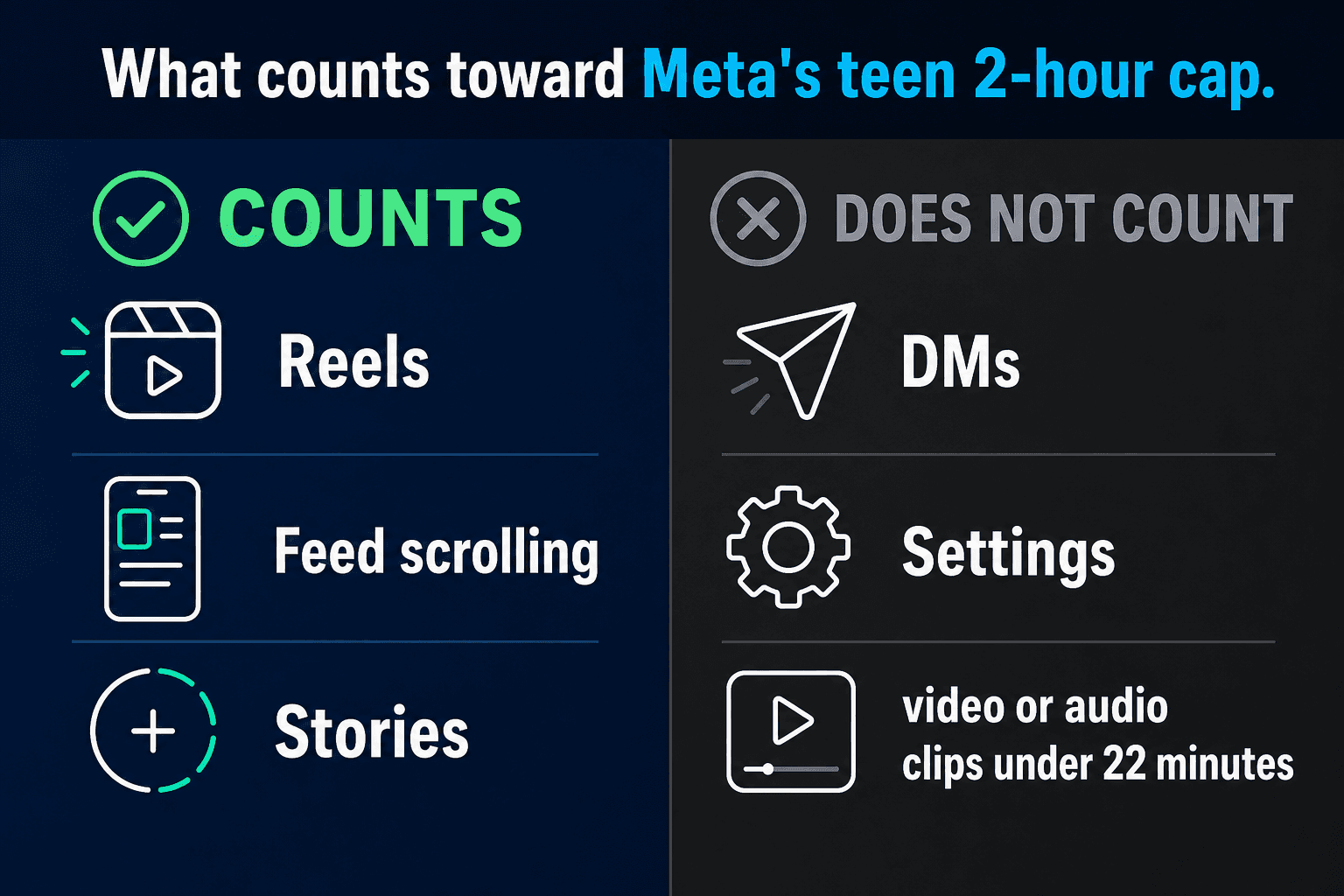
Feed scrolling, Reels, and Stories count. Direct messages, account settings, and video or audio longer than 22 minutes do not. That split is why a Reels-only teen funnel gets weaker, and why DMs and long-form video sit in a different bucket.
When do teen Instagram feeds go quiet?
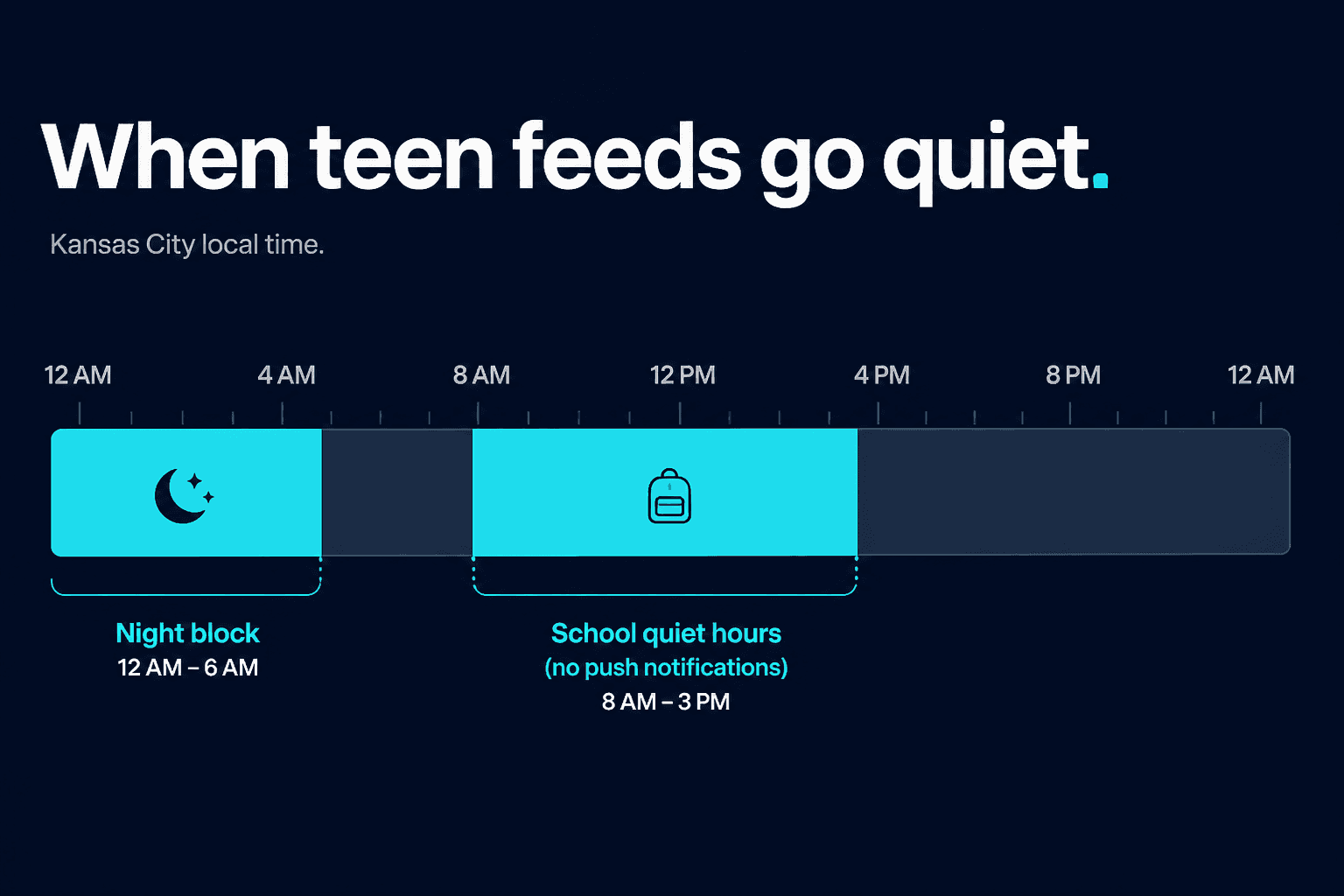
Night is blocked from midnight to 6 a.m., and school hours go quiet from 8 a.m. to 3 p.m. on weekdays. During the night block, teens cannot post or browse feeds, Stories, Reels, or Explore. Messaging still works. During school hours, the default is no push notifications except DMs and safety alerts.

The scroll also gets interrupted. Prompts appear at 15, 60, and 90 minutes of continuous scrolling. Teens get a reasonably accessible chronological feed. Parents can make that the default. Likes hide by default. Autoplay can be turned off.
We used The Verge's breakdown of the agreement and the states' settlement terms, not a recycled recap.
Meta is also publicly asking TikTok and YouTube to copy the cap. Treat that as a warning, not a promise. Do not rebuild your whole mix around a TikTok rule that has not shipped.
What does Meta's teen cap mean for Kansas City brands?
Teen attention on Meta was already expensive. Now a large share of it is rationed. A 16-year-old who used to open Instagram in the hallway, at lunch, and at 11:30 p.m. now has a budget. Night is mostly gone. School notifications are mostly gone. The algorithm may not even be the default.
Three practical consequences for family businesses in the KC metro:
Reach math breaks. The same ad set, same bid, same creative will not buy the same teen impressions it did in July. Frequency against 13–17 will look “efficient” on a dashboard and still miss the kid who already hit two hours.
Reels-only funnels get weaker. Short, looping, autoplay creative is exactly the behavior the settlement is built to interrupt. Longer video over 22 minutes is exempt from the cap. That is not a reason to dump a 24-minute cut into every campaign. It is a reason to stop pretending a 12-second Reel is the whole relationship.
Parents become the media channel. The cap only lifts if a parent says so. For dental, youth sports, churches, cultural festivals, tutoring, and family restaurants, the adult in the house was already the buyer. Instagram was just where the teen heard about you. That split is now wider.

What should Kansas City brands stop doing this month?
Stop buying “Gen Z on Instagram” as if it were still an all-day feed.
Measuring success only as Reels views and teen CPM.
Posting at 10 p.m. because “that's when they scroll.” For teens on Meta, a lot of that window is about to go dark.
Copying another agency's “we'll just move the budget to TikTok” slide. TikTok is not under this rule yet. It may be next. Diversify because the behavior is changing, not because a competitor's deck said so.
What should Kansas City brands do instead?
Split teen and parent creative, move discovery off a single infinite scroll, and make the remaining two hours worth using. This is the same point we make about AI search. The platform changed the distribution. The work is still understanding the person.
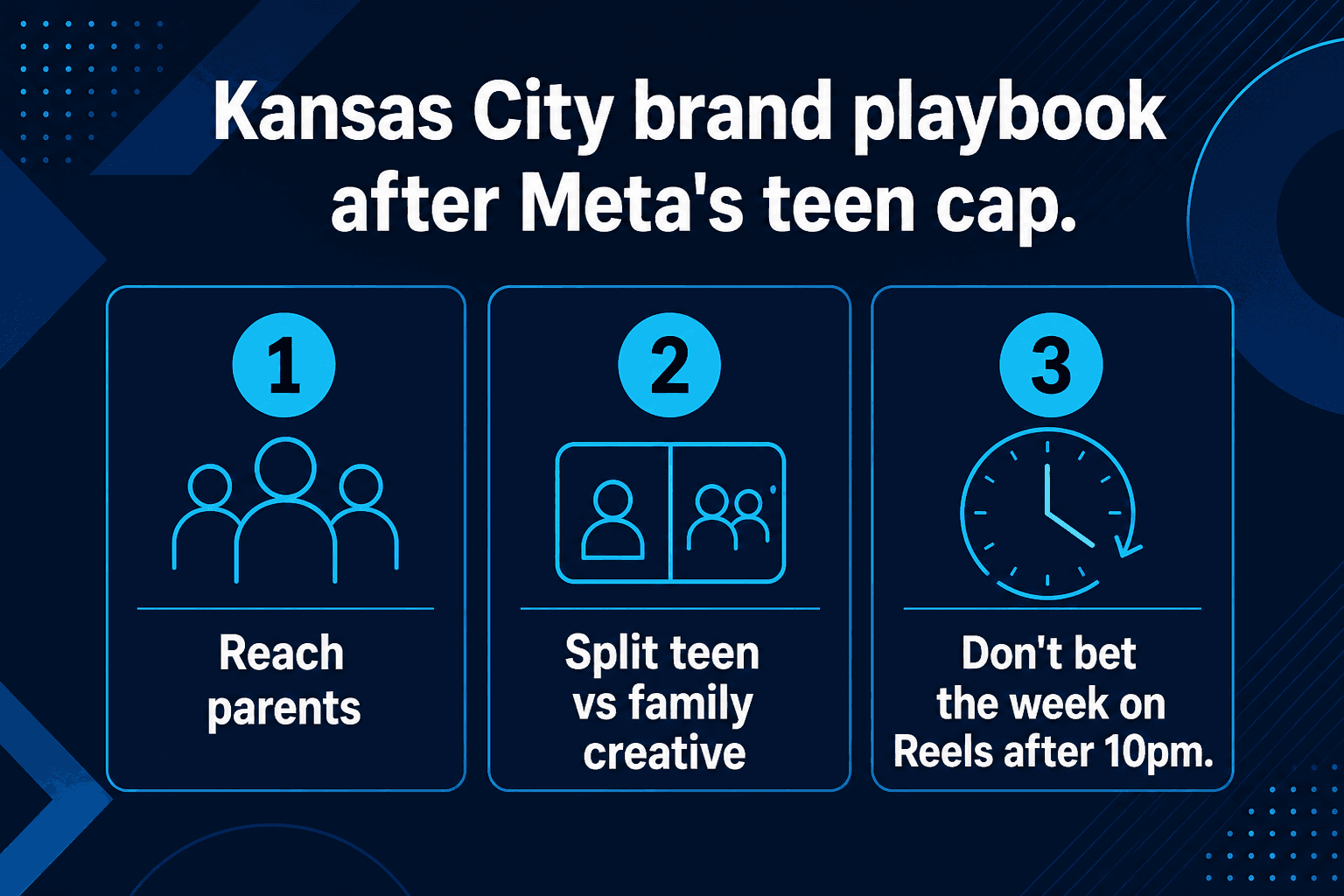
For a Kansas City business we would actually run:
Split the audience on purpose. Teens (awareness, culture, event presence) and parents (trust, proof, booking). Do not run one caption for both.
Move teen discovery off a single infinite scroll. YouTube, Google, school and church networks, group chats, and in-real-life moments (games, festivals, waiting rooms) pick up what a two-hour cap takes away. If you already do community and multicultural events, that is not “nice extra.” That is now distribution.
Make Meta creative worth the two hours. If a teen spends scarce time on Instagram, they will not spend it on a generic promo. Show the thing only you have: the chairside story, the rehearsal, the kitchen, the festival build.
Keep a human on the judgment. AI can cut variants fast. A person still decides whether the ad is for a 16-year-old or for the parent holding the phone at 8:05 a.m.
AI handles the volume. Humans decide who it's for. That split matters more when the platform itself is rationing attention.
Frequently asked questions
Can parents turn off Meta's two-hour cap?
Yes. A parent or guardian can override the default cap. The teen cannot. For brands, that is why the adult in the house is now a media channel, not just a buyer.
Do Instagram DMs count toward the two-hour limit?
No. Direct messages do not count toward the cap, and messaging still works during the night block. Feed, Reels, and Stories still do count.
Is TikTok included in Meta's teen time cap?
No. This settlement covers Instagram and Facebook. Meta has asked other platforms to copy the cap. That has not shipped. Plan for changing teen behavior, not for a TikTok rule that does not exist yet.
Did Meta kill Instagram for teens?
No. Meta put a clock on it. Brands that keep buying yesterday's scroll will call it a reach problem. Brands that rebuild around parents, community, and content worth the two hours will keep showing up.
If a meaningful share of your customers are families in the KC metro, this is the week to look at the mix, not next quarter. We can put your current Meta and YouTube plan next to these rules and show you what still makes sense.
Sources
The Verge — All the ways Instagram and Facebook are changing for teens
TechCrunch — Meta agrees to sweeping changes to restrict kids' access to its apps
Connecticut Attorney General — settlement summary
PROJECT


